Loading...

Crypto Trading Strategies For Beginners
"Trading" gets used as a catch-all word for a lot of very different behaviors, from checking your holdings once a month to staring at charts for eight hours a day. Before picking a strategy, it helps to understand what you're actually choosing between, and why most beginners are better served by simpler approaches than the ones that get the most attention online.
Trading vs. Investing: What's Actually Different?
If you've already read Is Cryptocurrency Still Worth Investing In?, you've seen the investing side of this: buying with a long time horizon and letting the position sit. Trading is a different activity entirely, actively buying and selling based on price movement, with the goal of profiting from shorter-term swings rather than long-term growth.
Neither approach is inherently right. They require different skills, different time commitments, and, importantly, different levels of risk tolerance.
Someone with a demanding job and little appetite for daily price-watching is usually better served by an investing approach; someone with the time, temperament, and genuine interest in markets might reasonably explore trading, understanding the odds are still stacked against consistent short-term profit.
Common Strategies Beginners Actually Use
HODLing. Buying and holding for the long term, largely ignoring short-term price movement. The lowest-effort approach, and historically one of the better-performing ones for beginners without the time or desire to actively manage positions. The trade-off is tolerating deep drawdowns along the way without reacting to them.
Dollar-cost averaging (DCA). Investing a fixed amount at regular intervals rather than timing the market. Dollar-Cost Averaging (DCA) vs Lump Sum Investing covers this approach and its trade-offs in full.
Swing trading. Holding a position for days or weeks to capture a medium-term price move, requiring more active chart-watching than HODLing but less than day trading. It sits in a middle ground many beginners find more sustainable than either extreme.
Day trading. Buying and selling within the same day, sometimes multiple times, aiming to profit from short-term volatility. The most demanding approach, and the one with the worst track record for beginners, covered honestly further down.
| Strategy | Time Commitment | Typical Risk |
|---|---|---|
| HODLing | Minimal | Lower (market-level risk only) |
| Dollar-cost averaging | Low | Lower to moderate |
| Swing trading | Moderate | Moderate to high |
| Day trading | Very high | Very high |
The Skill Most Strategies Depend On: Reading the Market
Beyond HODLing, every strategy on this list depends on some ability to read price charts and spot patterns. How to Read Crypto Candlestick Charts covers the most common way traders visualize price movement, and it's worth understanding even if you never plan to trade actively, since it's the vocabulary most market commentary is built on.

Risk Management Isn't Optional
Every strategy above, except pure HODLing, depends heavily on managing risk deliberately rather than hoping things work out. That means deciding in advance how much you're willing to lose on any single position, and having a plan for when to exit a losing trade rather than deciding in the moment, when emotion tends to take over.
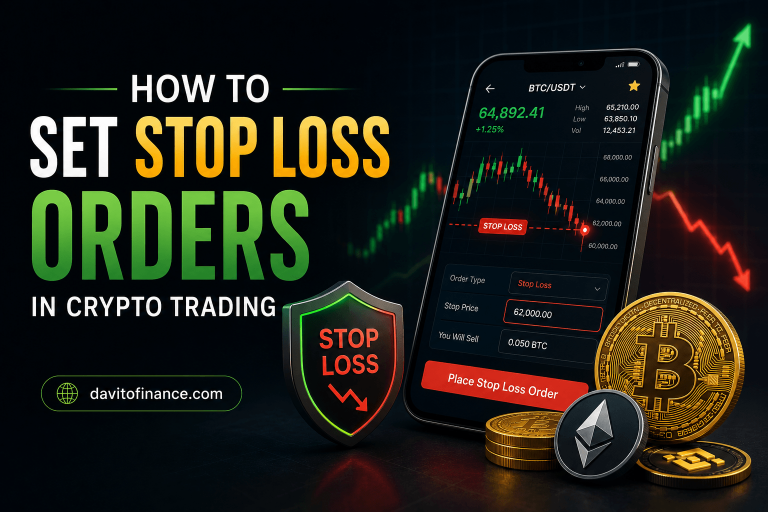
A common guideline is risking no more than a small, fixed percentage, often cited around 1 to 2%, of total capital on any single trade, regardless of how confident it feels at the time. How to Set Stop-Loss Orders in Crypto Trading covers the specific tool most traders use to enforce that discipline automatically.
Picking a strategy is the easy part. Executing it with discipline is where most beginners actually struggle.
The Crypto/DeFi Trading Course goes beyond definitions into how to actually build and stick to a strategy, with real risk management built in from day one.
The Honest Truth About Day Trading
Day trading gets disproportionate attention online because it makes for exciting content, screenshots of big wins, dramatic charts, but the actual data on outcomes is sobering.
Across broader market research, roughly 72% of day traders finish the year with a net loss, according to FINRA data. That research covers day trading generally rather than crypto specifically, but crypto's higher volatility and, on many platforms, higher trading fees give little reason to expect meaningfully better odds.
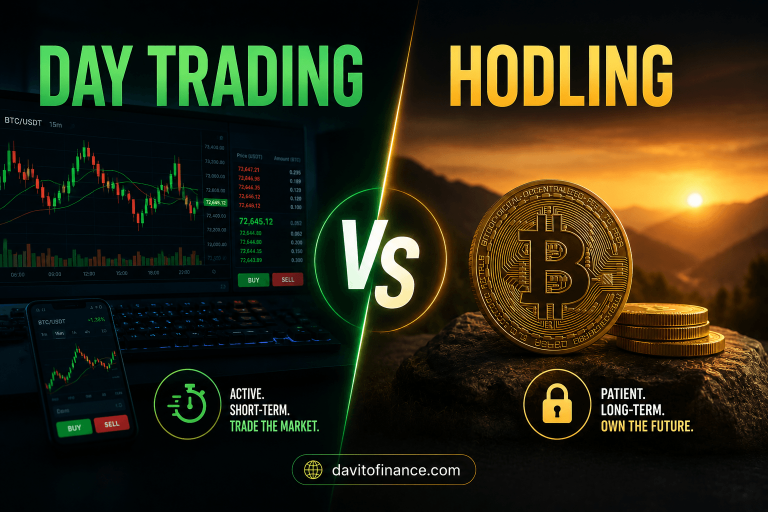
None of this means day trading is impossible to do well. It means it's a specialized skill most people significantly underestimate, closer to a demanding profession than a side activity you pick up casually. Day Trading vs HODLing: Which Strategy Wins? looks at this trade-off in more depth.
Which Strategy Actually Fits You?
A few honest questions narrow this down faster than another comparison chart. How much time can you realistically give this? Day trading demands hours of attention; HODLing and DCA demand almost none. How do you actually handle stress? Strategies built around frequent decisions under pressure aren't a fit for everyone, regardless of their theoretical upside.
Most beginners are better served starting with DCA or a HODL-based approach and adding more active strategies later, once they've built real experience, rather than starting at the deep end.
Common Mistakes That Derail Beginners
Most beginner trading losses trace back to a small set of repeated patterns: trading without a plan, risking too much on a single position, letting emotion override a predetermined exit point, and chasing a coin purely because its price is already rising.
Each one is preventable with the right habits, which is exactly why it's worth reading the full breakdown before you place a trade, not after a costly one. Common Crypto Trading Mistakes Beginners Make breaks each of these down individually, with what to do instead.
FAQs | Crypto Trading Strategies For Beginners
What's the best trading strategy for beginners?
There's no universal answer, but HODLing and dollar-cost averaging tend to be the most forgiving starting points, since they require the least active decision-making and carry lower emotional risk than short-term trading.
Can you actually make money day trading crypto?
Some people do, but the data across trading markets broadly shows a small minority achieve consistent long-term profitability. It's realistic to expect this to be genuinely difficult, not a shortcut to quick income.
Do I need to understand technical analysis to trade crypto?
For strategies beyond simple HODLing, yes, at least at a basic level. How to Read Crypto Candlestick Charts is a reasonable starting point.
How much money do I need to start trading?
There's no fixed minimum, but position sizing matters more than the total amount. Whatever you start with, risking a small, defined portion per trade matters far more than the size of your total account.
Can I switch strategies later if one isn't working?
Yes, and it's common. Many traders start with DCA or HODLing, then gradually add more active strategies as they build experience and a clearer sense of their own risk tolerance.
There's no single "correct" strategy, only the one that actually fits your time, temperament, and tolerance for risk. Most beginners are better served starting simpler than they expect, and adding complexity only once they've proven they can stick with a plan.
Ready to build a real strategy instead of piecing one together from scattered advice? The Crypto/DeFi Trading Course walks through exactly that, step by step.
Prefer to learn from a book, at your own pace? The Crypto Book Series covers this in more depth. If you're new to crypto, start with Book 1, then work through the series as you go.


Figuring out which strategy actually fits you? Join DavitoFinance Pro on Telegram, free, and surrounded by people building wealth together in real time.