Loading...

Common Crypto Trading Mistakes Beginners Make
Most beginner trading losses aren't caused by bad luck or an unpredictable market. They trace back to a small, repeatable set of mistakes that show up across nearly everyone's first year. Recognizing them in advance is one of the few genuine edges a beginner actually has.
Trading Without a Real Plan
Opening a position because a coin "looks like it's about to move" isn't a plan, it's a hope with extra steps. A real plan defines your entry reasoning, your exit point on both the upside and downside, and your position size, all decided before you click buy.
Without those decisions made in advance, every choice gets made live, under pressure, with money already on the line, exactly the conditions where judgment tends to be worst. Crypto Trading Strategies for Beginners covers the actual strategies worth building a plan around.
Letting FOMO Drive Entries
Buying because a price is already rising fast and everyone seems to be talking about it is one of the most consistent patterns behind beginner losses. By the time an asset is generating that much excitement, a meaningful part of the easy upside is often already gone, and the people buying into the noise are frequently the ones left holding it during the pullback that follows.
The uncomfortable truth is that FOMO feels identical to genuine conviction from the inside, which is exactly what makes it so effective at overriding better judgment.
Skipping Risk Management Entirely
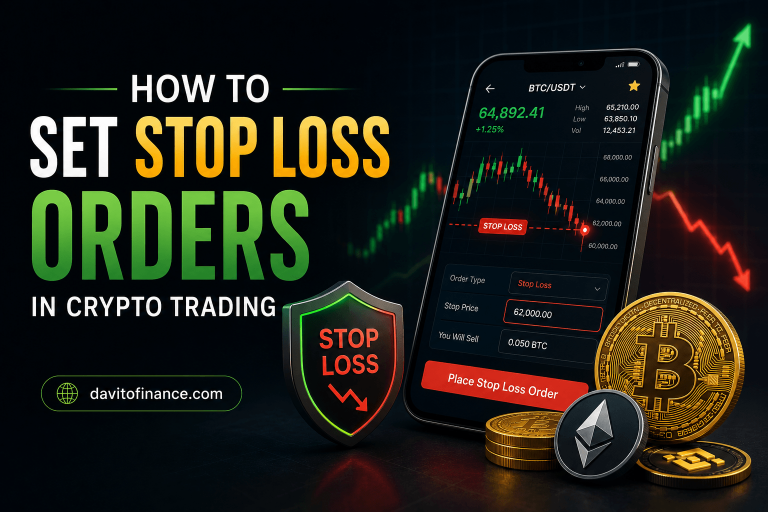
Trading without a stop-loss or any defined maximum loss means a single bad trade can undo weeks of gains. How to Set Stop-Loss Orders in Crypto Trading covers exactly how to build this in from the start, rather than learning its importance the expensive way.
Revenge Trading After a Loss
After a losing trade, the instinct to immediately jump back in and "win it back" is strong, and it's almost always destructive. Revenge trading replaces a reasoned strategy with an emotional reaction, usually leading to a second loss layered on top of the first.
The better response to a loss is a deliberate pause, not an immediate re-entry.
Using Leverage Before Understanding It
Leverage lets you control a larger position with less capital, and it dramatically shrinks the room you have for error. A 10x leveraged position has roughly a 10% cushion before liquidation; a 20x position has about 5%; a 40x position has roughly 2.5%.
In a market that can move several percent in minutes, that's an extremely thin margin for error, and it's a major reason leverage-related losses are so common among beginners who don't fully grasp what they've signed up for.

Overtrading
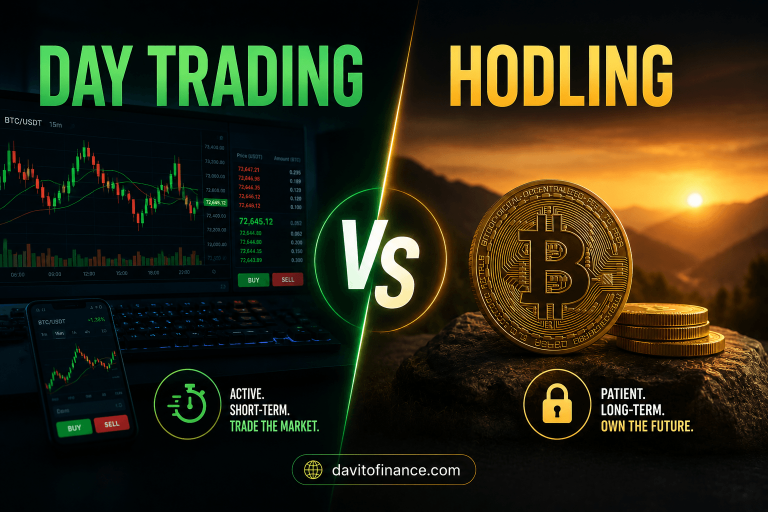
More trades don't mean more profit. Frequent trading racks up fees, increases the number of decisions made under pressure, and statistically gives more opportunities for mistakes to compound. Day Trading vs HODLing: Which Strategy Wins? covers why less frequent, more deliberate positioning tends to outperform constant activity for most people.
Confirmation Bias: Only Seeking Information That Agrees With You
Once someone owns a coin, they tend to seek out news and opinions that confirm the purchase was smart, while dismissing anything that suggests otherwise. This bias is subtle and universal, and it actively works against clear-headed decision-making right when you need it most.
A simple counter is deliberately seeking out the strongest argument against a position you hold, not necessarily to talk yourself out of it, but to make sure you've actually considered it.
Ignoring Fees and Tax Obligations
Trading fees seem small individually but compound quickly with frequent activity, quietly eating into returns that looked fine on paper. Tax obligations catch even more beginners off guard: in many countries, every trade, not just a final cash-out, can be a taxable event.
Not tracking this from day one often means an unpleasant surprise later, potentially owing real money on gains that have since evaporated.
Keeping Everything on the Exchange
It's convenient, and for smaller, actively traded amounts, reasonable. But leaving significant holdings on an exchange indefinitely means your security depends entirely on that platform's, not your own. Crypto Wallets Explained: Hot vs Cold Storage covers how to think about that trade-off as your holdings grow.
Knowing the mistakes is useful. Building habits that actually prevent them is what changes outcomes.
The Crypto/DeFi Trading Course is built around exactly that: a structured system that removes the guesswork these mistakes tend to hide inside.
How to Actually Avoid These
None of these mistakes require willpower alone to fix. They're mostly solved with structure: a written plan before you enter a trade, a stop-loss set in advance, a fixed position size, and a rule requiring a pause before re-entering after a loss.
None of this needs to be complicated: a single page with your own rules written down, reviewed before every trade, catches most of these mistakes before they happen. Common Crypto Terms Every Beginner Should Know is worth keeping open if any of the vocabulary above still feels unfamiliar as you build that structure out.
FAQs About Crypto Trading Mistakes
What's the single biggest mistake beginners make?
Trading without any plan is the root cause behind most of the others, since a plan is what would have prevented the FOMO entry, the missing stop-loss, and the revenge trade in the first place.
Is leverage always a bad idea for beginners?
Not inherently, but it requires a level of understanding and discipline most beginners haven't built yet. Starting without leverage while learning the fundamentals is generally the safer sequence.
How do I know if I'm revenge trading?
A useful test: if you can't clearly explain your reasoning for a trade beyond "I need to make back what I just lost," that's revenge trading, not strategy.
Can experienced traders still make these mistakes?
Yes. These patterns are rooted in normal human psychology, not inexperience alone, which is exactly why structure and discipline matter at every level, not just for beginners.
Do I need to track every trade for taxes?
In many countries, yes, and the rules vary significantly by jurisdiction. It's worth understanding your local requirements before trading actively, rather than reconstructing a year of activity later.
Is it a mistake to hold a losing position hoping it recovers?
It can be, if there's no actual reasoning behind holding beyond hoping for a return to breakeven. A predetermined exit point, set before the trade, removes this decision from the moment you're most likely to get it wrong.
Every mistake on this list is avoidable, and none of them require special talent to sidestep, just structure decided in advance and the discipline to actually follow it once emotions get involved.
Ready to trade with structure instead of instinct? The Crypto/DeFi Trading Course builds the habits that prevent these mistakes before they cost you.
Prefer to learn from a book, at your own pace? The Crypto Book Series covers this in more depth. If you're new to crypto, start with Book 1, then work through the series as you go.


Made one of these mistakes already? You're not alone. Join DavitoFinance Pro on Telegram, free, and swap notes with people who've been there too.