Loading...
Best Altcoins to Watch in 2026
Any list with “2026” in the title is out of date the moment market conditions shift, and anyone claiming certainty about which altcoins will perform best is guessing, however confidently. What follows isn’t a prediction or a buy list. It’s an honest look at altcoins that currently hold a genuine market position and real utility, the kind worth understanding regardless of where their price goes next. Most “best altcoins” content online works backward from recent price performance, then builds a narrative to justify it after the fact. This one works forward from actual market position, use case, and development history instead, even though that approach is inherently less exciting to read. Treat this as a learning watchlist of the best altcoins 2026 has produced so far, not a buy list.
Disclosure: Some links in this article are affiliate links. If you sign up through them, we may earn a commission at no extra cost to you. This never influences which projects we cover or how we describe them.
What “Worth Watching” Actually Means Here
This list isn’t ranked by which coin gained the most this year, chasing recent performance is exactly the FOMO pattern Common Crypto Trading Mistakes Beginners Make warns against. Instead, each entry below has an established market position, a clear, explainable use case, and ongoing development activity, the same qualities What Are Altcoins and How Do They Work? covers as signals worth looking for. It also isn’t an exhaustive list. Dozens of other projects have legitimate claims to real utility and could reasonably belong here too; five is a starting point for understanding what “real” looks like, not a definitive ranking of the entire market. None of this is a guarantee of future performance. It’s a starting point for your own research, not a substitute for it.
The Best Altcoins 2026 Investors Are Watching
| Coin | Category | Known For |
|---|---|---|
| Ethereum (ETH) | Smart contract platform | The largest ecosystem of applications built on any blockchain |
| Solana (SOL) | Smart contract platform | High transaction speed, heavy use in DeFi and consumer apps |
| XRP | Payments | Cross-border settlement, long-standing institutional relationships |
| Chainlink (LINK) | Oracle infrastructure | Connecting smart contracts to real-world data securely |
| Bittensor (TAO) | Decentralized AI | A marketplace for machine learning models and compute power |
Ethereum (ETH)
Ethereum introduced smart contracts to crypto and remains the platform with the deepest ecosystem of applications built on top of it, from DeFi protocols to NFT marketplaces to stablecoin infrastructure. Its position as the default foundation for new projects gives it a network effect that’s difficult for newer platforms to replicate, even ones with faster or cheaper transactions. The trade-off has historically been higher transaction fees during busy periods, though Layer 2 networks like Arbitrum and Base have taken on a growing share of transaction volume, addressing the fee problem without requiring users to leave the Ethereum ecosystem entirely. Spot Ethereum ETFs have also opened a regulated path for institutional capital that didn’t exist in Ethereum’s earlier years. How Does Blockchain Technology Work? covers the underlying mechanics if you want the full technical picture.
Check Current Price →Solana (SOL)
Solana was built for speed and low transaction costs from the ground up, which has made it a popular choice for DeFi applications, consumer apps, and high-frequency trading activity that would be impractical on a slower, more expensive network. That speed comes with trade-offs in decentralization compared to Ethereum, a common pattern across faster blockchains generally. Solana has also weathered real network outages in its earlier years, worth knowing even though reliability has improved significantly since. Institutional interest has followed the technology: spot Solana ETF filings emerged in 2026, following the same regulatory path Bitcoin and Ethereum ETFs took before it, though approval and adoption timelines remain uncertain.
Check Current Price →XRP
XRP is built specifically around fast, low-cost cross-border payments, and it has one of the longest track records of any altcoin in actual institutional use for that purpose. Its institutional relationships have been years in the making, and ongoing regulatory clarity in the US has removed some of the legal uncertainty that weighed on the token for years. That said, XRP’s value is tied more tightly to actual adoption of its payment rails by financial institutions than to the kind of broad developer activity that drives Ethereum or Solana, worth keeping in mind when comparing it to the more general-purpose platforms on this list.
Check Current Price →Chainlink (LINK)
Chainlink solves a problem most beginners don’t realize exists: blockchains can’t natively access real-world information, stock prices, weather data, sports results, on their own. Chainlink’s oracle network securely feeds that outside data into smart contracts, making it foundational infrastructure for a huge share of DeFi, even though it rarely gets the attention flashier projects do. Its Cross-Chain Interoperability Protocol (CCIP) has also become a standard piece of infrastructure for projects moving data or assets securely between different blockchains, a growing need as the number of active blockchains keeps expanding rather than consolidating into one dominant network. That cross-chain positioning gives Chainlink relevance regardless of which specific Layer 1 or Layer 2 ends up winning any given category, an unusual kind of insulation for an altcoin to have.
Check Current Price →Bittensor (TAO)
Bittensor sits at the intersection of two major trends, crypto and AI, operating as a decentralized marketplace where developers contribute machine learning models and computing power in exchange for TAO tokens. The network is organized into specialized “subnets,” each focused on a different AI task, from language models to compute-sharing to prediction markets. Recent integrations, including a connection to Coinbase’s Base network facilitated by Chainlink’s cross-chain infrastructure, and a partnership bringing Bittensor’s models into a major exchange’s AI marketplace, reflect real efforts to connect the network’s AI capabilities to broader crypto infrastructure rather than keeping them isolated. It’s a newer, more experimental project than the other four here: much of current network activity is subsidized by token emissions rather than fully organic, paying demand, a dynamic worth understanding before treating its current activity level as representative of long-term demand. It’s included because the use case is genuinely novel, not because it’s a safer bet than the more established names above it.
Check Current Price →Why Market Cap Size Matters When Comparing These
Even within this list, there’s a meaningful size difference. Ethereum and Solana sit among the largest cryptocurrencies by market value, with deep liquidity and years of price history across multiple market cycles. XRP and Chainlink occupy a similar large-cap tier with their own long track records. Bittensor is meaningfully smaller and newer, which means its price can move more dramatically on comparatively less capital, in both directions. Larger market cap doesn’t guarantee safety, nothing in crypto does, but it generally correlates with deeper liquidity, more scrutiny from analysts and institutions, and a longer history to actually evaluate. A large buy or sell order might barely register on Ethereum’s order book while meaningfully moving the price of a smaller project, a practical reason liquidity matters beyond the abstract.
What These Have in Common, Beyond the Hype
Each of these solves a specific, explainable problem rather than existing purely as a speculative vehicle. Each has years of development history and active, ongoing work rather than a one-time launch followed by silence. And each has a use case you could explain to someone else in a sentence or two without mentioning price at all. That last test filters out an enormous share of the altcoin market on its own. None of them depend on a single celebrity endorsement, a countdown timer, or a presale structure to generate interest, patterns worth treating as red flags when you encounter them elsewhere in the altcoin market. That doesn’t make any of them risk-free investments. It makes them a meaningfully different starting point than most of what circulates in crypto social media.
Before You Buy Any of These
A few practical steps worth taking regardless of which project interests you: read the project’s own documentation directly rather than relying entirely on secondary summaries, including this one. Check whether development activity is actually ongoing, most major projects publish this publicly. Look at how the token’s supply works, whether it’s inflationary, capped, or something in between, since this materially affects long-term value. Consider starting with a small position and dollar-cost averaging in rather than committing a full amount at once, an approach Dollar-Cost Averaging (DCA) vs Lump Sum Investing covers in detail, especially given how much more volatile individual altcoins tend to be than Bitcoin. And decide on your exit criteria, both upside and downside, before you buy, not after.
How to Evaluate Any Altcoin Yourself
This list will age. New projects will earn a place on it and some of these five may not hold their current position forever. That’s true of every “best of” list in crypto, not just this one, which is exactly why the underlying skill matters more than any specific ranking. How to Research a New Altcoin Before Investing walks through the actual framework for evaluating a project yourself, so you’re not dependent on any single list, including this one, staying current.
A list is a starting point. Knowing how to actually evaluate and size a position is what determines the outcome.
The Crypto/DeFi Trading Course covers real altcoin evaluation frameworks, position sizing, and risk management as one connected system, not a list to copy.
The Risks Worth Remembering
Every coin on this list, established as they are, carries real risk. All five are meaningfully more volatile than traditional assets, and none are immune to a broad market downturn dragging prices down regardless of individual fundamentals. Market position today doesn’t guarantee market position in a year; several altcoins that once ranked among the largest by market cap no longer do, a reminder that “established” describes the present, not a permanent guarantee.
Regulatory risk varies by project too. Payment-focused tokens like XRP are more directly exposed to financial regulation than infrastructure tokens like Chainlink. Newer, smaller projects like Bittensor carry additional risk simply from having less time to be tested by a full market cycle. Is Cryptocurrency Still Worth Investing In? covers the broader risk picture worth weighing before allocating money to any of these, or to crypto at all.

Frequently Asked Questions
Is this list financial advice?
No. It’s informational context about established projects, not a personalized recommendation. Your own research and risk tolerance should drive any actual decision, and this article isn’t a substitute for either.
Why isn’t Bitcoin on this list?
By definition, Bitcoin isn’t an altcoin. Bitcoin vs Altcoins: What’s the Difference? covers how it compares to everything on this list.
Is it better to buy the coin directly or get exposure through an ETF?
It depends on your goals. Direct ownership gives you the actual asset and the ability to use it within its ecosystem; an ETF offers regulated, simplified exposure without needing a wallet or exchange account, generally at the cost of some flexibility.
Why do some of these have much higher prices per coin than others?
Price per coin depends entirely on how many coins exist, not on the project’s overall value. A low-priced token and a high-priced token can have identical total market value depending on their respective supplies; market cap, not per-coin price, is the more meaningful comparison.
How often does a list like this change?
Market positions can shift meaningfully within months, sometimes faster. Treat this as a dated snapshot rather than a permanent ranking, and re-verify current market data before acting on anything here.
What’s the difference between these and a presale or new token launch?
Everything on this list is an established, exchange-listed project with years of trading history and verifiable development activity. Presales and brand-new launches carry a fundamentally different, generally much higher, risk profile, and deserve significantly more scrutiny before any money changes hands.
Do I need to buy all of these to be diversified?
No. Diversification is about not concentrating everything in one bet, not about owning every option available. A smaller number of projects you’ve actually researched thoroughly is generally more manageable than a large number you understand only superficially.
Should I buy all five of these?
Not necessarily, and definitely not without your own research into each one individually. How to Research a New Altcoin Before Investing covers how to actually make that decision.
None of these five are guaranteed to perform well going forward, and none of this replaces doing your own research before putting money into any of them. What they share is a real, explainable reason for existing, which is a meaningfully higher bar than most of the altcoin market clears. That bar is worth carrying with you well beyond this specific list, whether you’re evaluating a household name or a project you heard about for the first time an hour ago. Any list of the best altcoins 2026 can offer is a starting point for research, never a substitute for it.
Ready to evaluate opportunities like these with a real framework? The Crypto/DeFi Trading Course is built for exactly that.
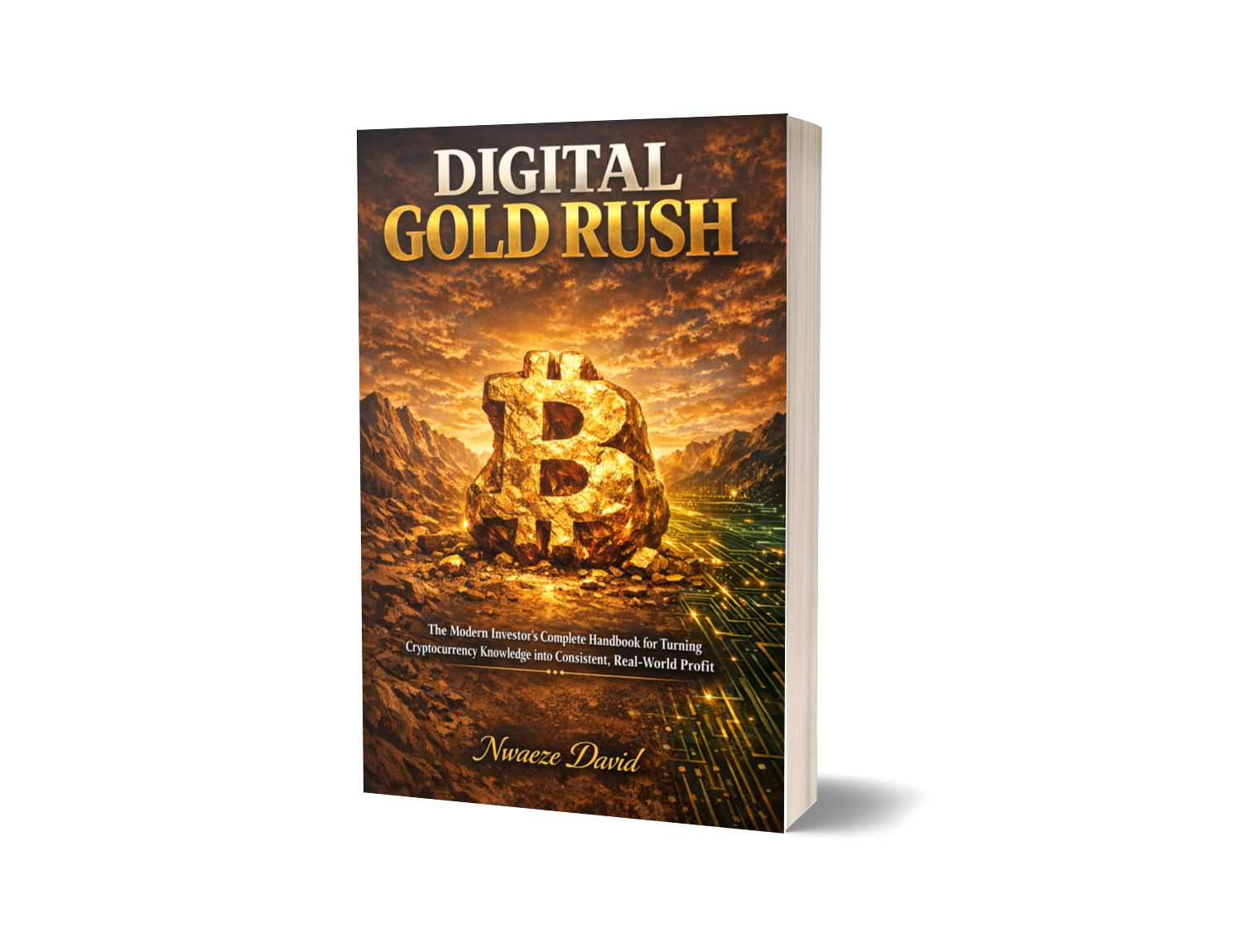
Prefer to learn from a book, at your own pace? The Crypto Book Series covers this in more depth. If you’re new to crypto, start with Book 1, then work through the series as you go.


Want a second opinion on any of these before you act? Join DavitoFinance Pro on Telegram, free, and talk it through with people evaluating the same projects.